
Using SBAR for Safer Hospice Handovers – The Vantage Guide for UK Hospices
Patient safety within palliative and end-of-life care relies entirely on seamless communication. In the fast-paced and emotional environment of a UK hospice, the transfer of patient information between shifts, multidisciplinary teams, and external healthcare providers represents a significant operational risk. When critical details are missed during a handover, patient safety, symptom management, and the overall quality of care are immediately compromised.
To mitigate these clinical gaps, hospices across the UK are increasingly adopting the SBAR (Situation, Background, Assessment, Recommendation) communication framework. Originally developed by the military and widely adopted across acute healthcare settings, SBAR provides a structured, predictable map for sharing clinical information.
However, standardising the framework on paper or scattered spreadsheets introduces its own set of administrative hurdles. For compliance nursing directors, ensuring that SBAR is used consistently, while maintaining solid evidence for the Care Quality Commission (CQC), requires moving away from old-school documentation and embracing centralised digital governance.
Key Takeaways
- Standardised Communication – The SBAR framework ensures all clinical handovers are structured, consistent, and free from subjective misinterpretation.
- Risk Mitigation – Clear handover structures dramatically reduce communication-related incidents, safeguarding vulnerable palliative care patients.
- CQC Inspection Readiness – Using a digital system like our compliance and quality management software to track and audit handovers provides immediate, real-time evidence of safe, effective care for CQC inspectors.
- Replacing Spreadsheets – Moving from manual records to Vantage for incident and event management eliminates human error and saves valuable nursing hours.
The Critical Role of Handovers in Hospice Care
Hospice care involves highly complex medication regimes, sensitive emotional dynamics, and rapid changes in patient conditions. Handovers are not merely a routine shift change; they are a critical safety checkpoint.
Whether it is a nurse handing over to the incoming night team, or a hospice specialist communicating with a community GP, a breakdown in information transfer can have severe consequences. Missing a minor detail regarding anticipatory prescribing, syringe driver settings, or a family’s resuscitation preferences directly impacts patient dignity and comfort.
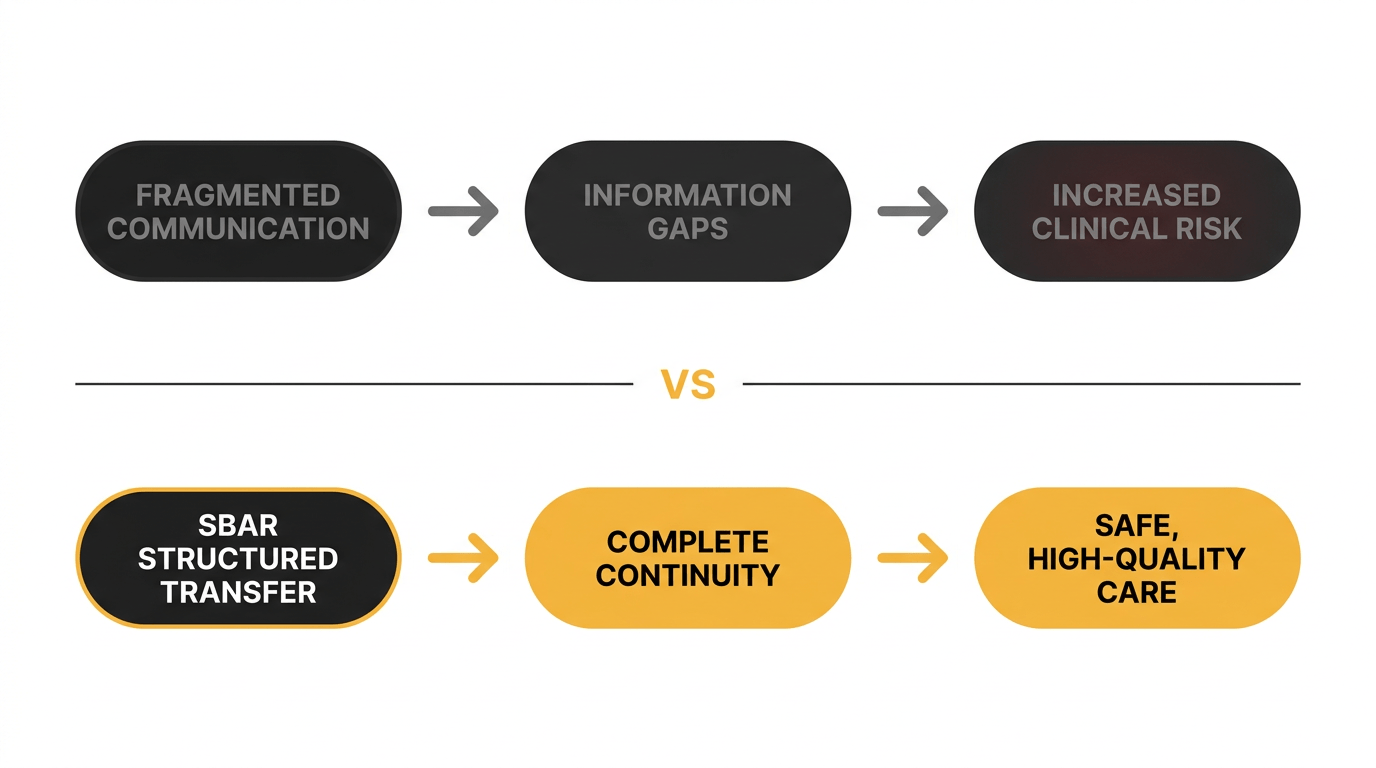
By introducing a structured methodology, clinical teams can eliminate ambiguity, ensuring that every professional involved in a resident’s care operates within the same context.
What is the SBAR Framework?
SBAR is a powerful tool because it reduces complex clinical pictures into four clear, actionable steps:
- Situation – What is happening right now? (e.g., “Patient in Bed 4 has developed breakthrough agitation over the last two hours.”)
- Background – What is the clinical context? (e.g., “The patient has a diagnosis of advanced lung cancer and was admitted three days ago for symptom control. Current medication includes…”)
- Assessment – What do you think the issue is? (e.g., “The current dose of midazolam appears insufficient, and the family is increasingly distressed by the patient’s restlessness.”)
- Recommendation – What specific action are you requesting or taking? (e.g., “I recommend a review of the syringe driver dosage by the medical lead within the next hour.”)
This format forces the speaker to organise their thoughts logically and ensures the recipient receives an explicit request for action, rather than a vague update.
The Negatives of Manual Handover Tracking
While many compliance nursing directors recognise the value of SBAR, implementing it across a hospice via traditional methods, such as paper forms, verbal updates, or the likes of Excel spreadsheets, creates a significant reliability gap.
When handover notes are trapped in localised documents, senior clinical leads lose all visibility. There is no automated way to ensure staff are filling out forms correctly, nor is there an easy method to audit whether critical recommendations were actually followed up.
This is where our compliance & quality management software comes in.
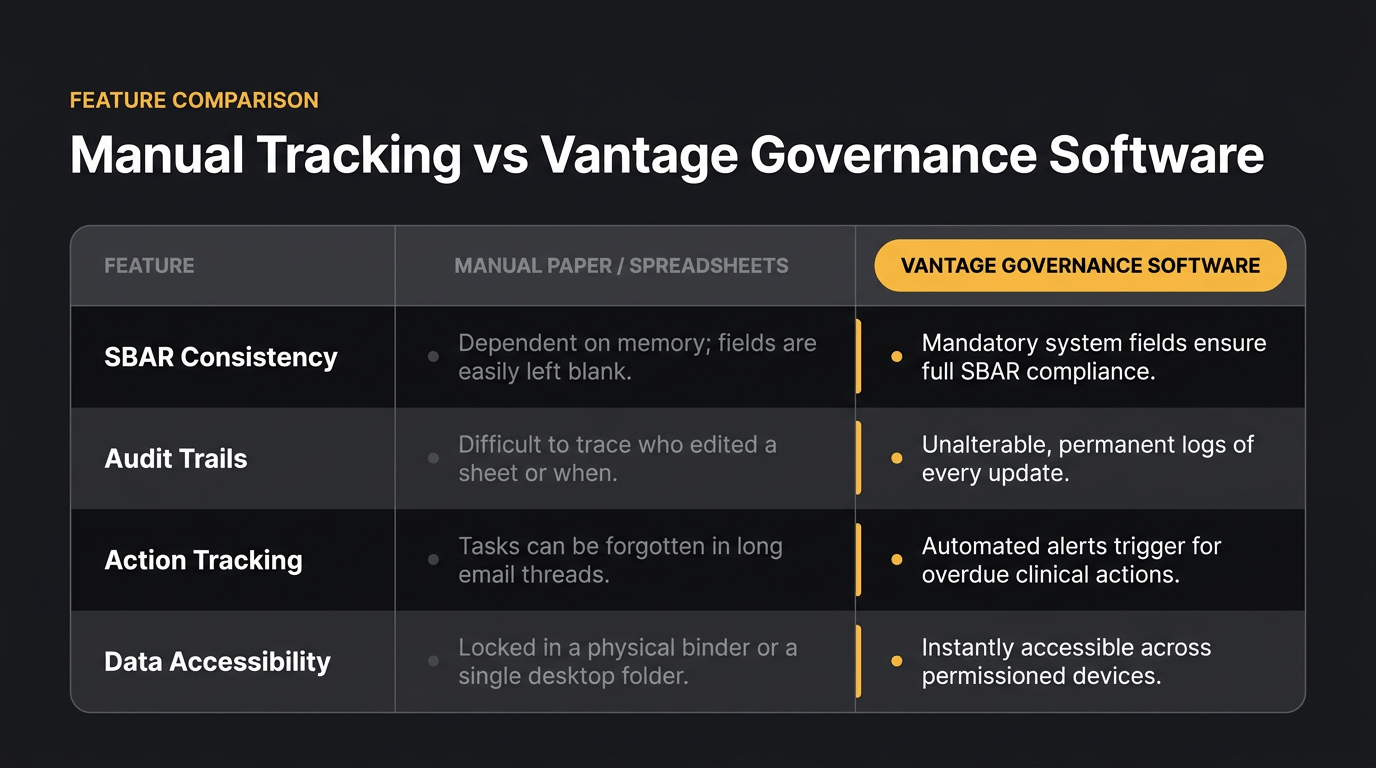
In addition to this, manual data entry eats into active nursing time. Instead of sitting at a desk cross-referencing spreadsheet rows to verify that a handover took place safely, clinical leads should be out on the floor, supporting staff and reviews. When communication logs are unorganised, minor discrepancies can quickly turn into reportable adverse events. Transitioning to an integrated platform ensures that these systemic issues are instantly escalated to an open Incident & Event Management log rather than being lost in translation.
How Centralised Software Elevates Clinical Governance
Transitioning your hospice handovers and risk logs into a centralised digital platform transforms clinical governance from a reactive chore into a proactive system.
With Compliance & Quality Management software like Vantage, SBAR templates are integrated directly into the daily workflow. When a clinical incident occurs or a complex handover is required, staff are guided through the process automatically. The system unifies your safety protocols, clinical handovers, and compliance modules under one secure digital roof.
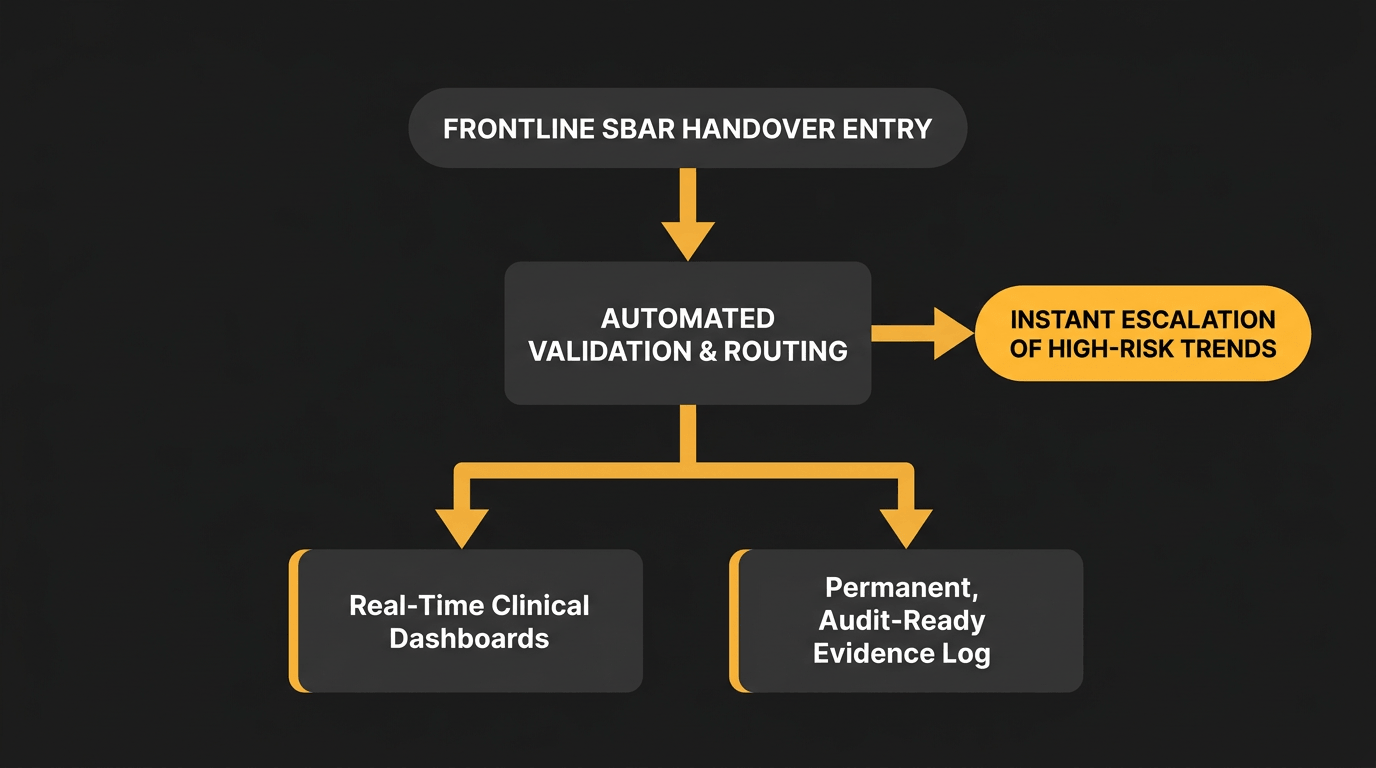
If a handover highlights an ongoing medication or equipment issue, the platform automatically logs the event, preventing critical trends from being quietly buried in an unmonitored spreadsheet. This structural shift allows you to manage proactive Risk Management tracking to catch clinical trends early, long before they escalate into serious safety breaches.
Reducing the Stress of a CQC Inspection – at the Touch of a Button
For CQC-qualified private clinics and hospices, regulatory inspections can be a stressful time of frantic document hunting. Under the CQC Single Assessment Framework, inspectors demand real-time validation and evidence-based tracking to prove your service is Safe and Well-led.
When a CQC inspector walks through the door of a hospice using Vantage, the atmosphere remains calm. Instead of scrambling to locate missing paper files or stitching together data from twelve separate spreadsheets, staff simply open the Vantage platform on a PC.
With a few clicks, you can present a comprehensive, unalterable audit trail demonstrating exactly how your clinical teams use SBAR to manage handovers, escalate risks, and continuously improve patient safety. This level of transparency instantly builds trust with inspectors and proves your quality assurance processes are robust and sustainable.
Summary
Adopting the SBAR framework is an excellent step toward improving clinical communication, but the tool is only as reliable as the system supporting it. Relying on outdated spreadsheets and manual paperwork leaves your hospice vulnerable to human error, compliance gaps, and administrative burnout.
By upgrading to a centralised compliance system, you automate the heavy lifting of data capture and risk reporting. This protects your regulatory standing, secures your data, and most importantly, returns valuable hours to your highly skilled nursing team, allowing them to focus entirely on compassionate patient care.
Take Control of Your Hospice Governance
Don’t let scattered spreadsheets compromise patient safety or complicate your next CQC inspection. Vantage brings your Incident & Event Management, Risk Management, and Compliance & Quality Management together into one seamless, inspector-ready dashboard.